
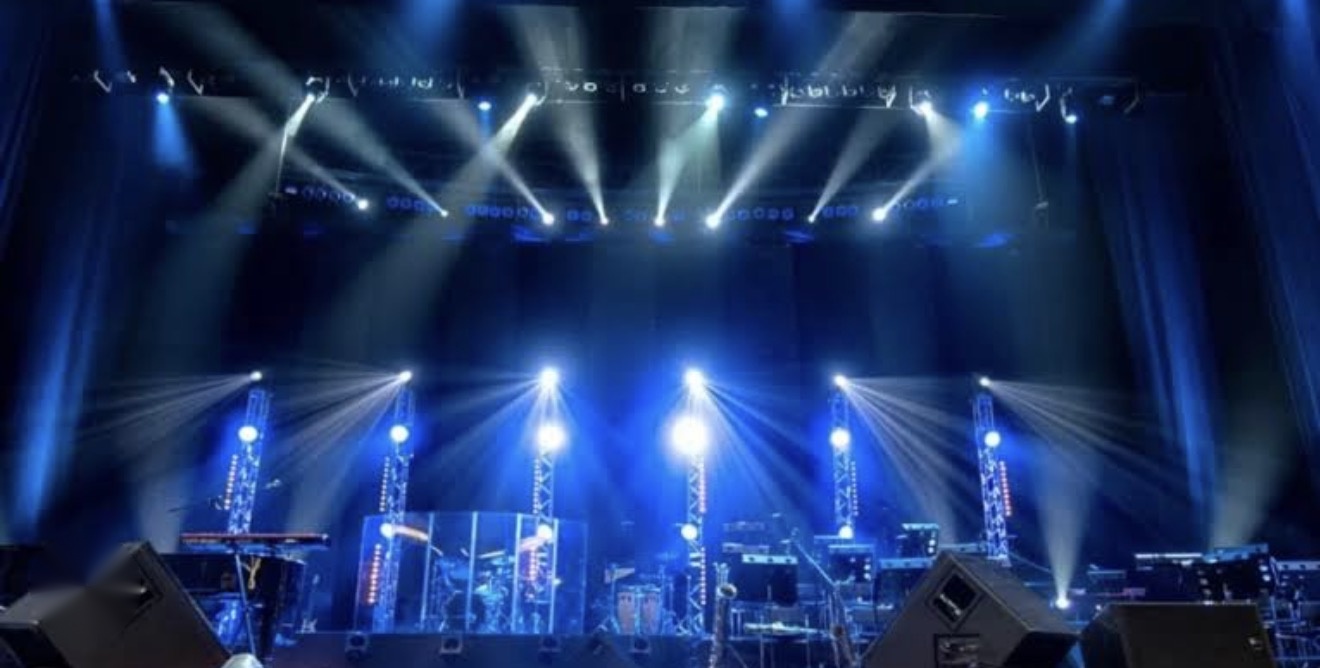
Good lighting lets people see the speaker, the band and the room the way they were meant to be seen. Divine Audio Solutions designs and installs permanent stage lighting systems for houses of worship, nightclubs, restaurants and music venues, built to run every week with simple, reliable control.
Where permanent stage lighting fits
Houses of worship. Even, flattering front light on the pulpit and platform, color washes for worship sets, and camera-friendly levels for streaming. House lights are integrated so a volunteer can move from walk-in to service to dismissal with one button.
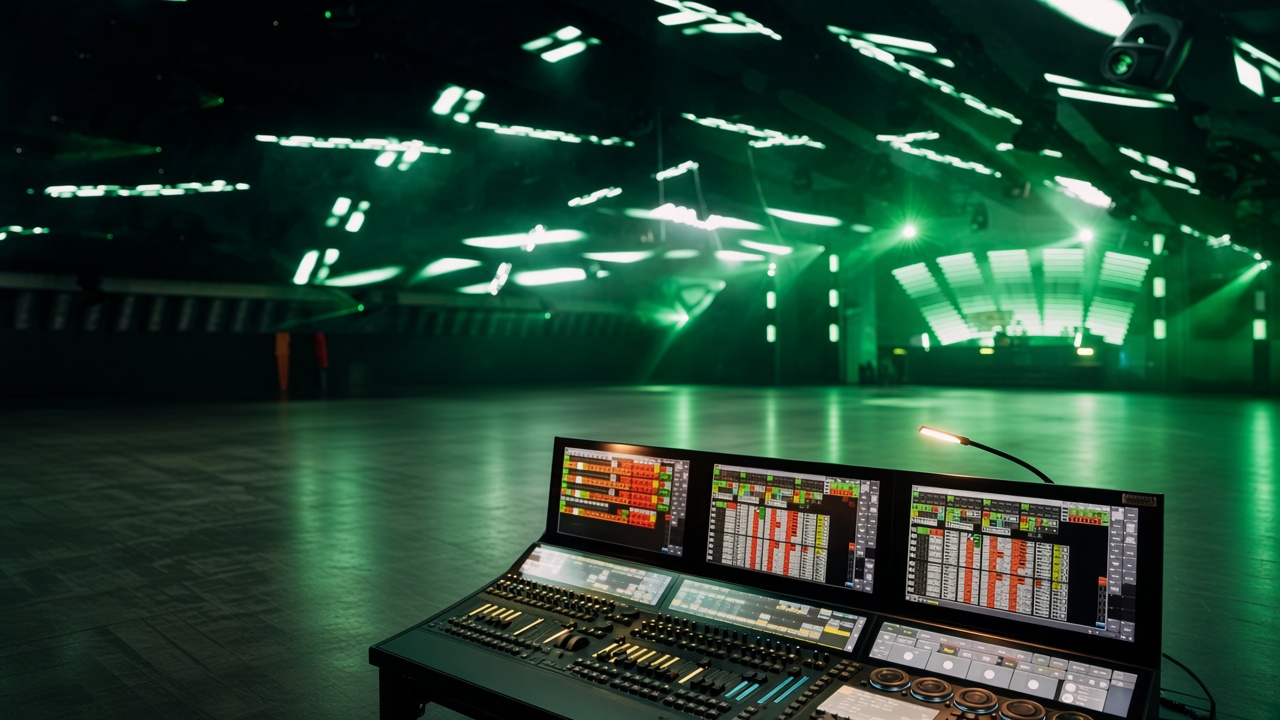
Nightclubs. Moving heads, effects and color washes tied into a controller that can run programmed looks or follow the music, with fixed positions above the dance floor and DJ booth.
Restaurants and bars. A small stage or performance corner with discreet fixtures, warm color temperatures and control that staff can recall without training.
Live music rooms. A house rig that resident and visiting operators can use night after night, with a standard patch and documented addressing.
Fixture types
- LED wash fixtures blend color across a stage or wall. They draw far less power and produce less radiant heat than older incandescent fixtures.
- Profile (ellipsoidal) fixtures project a hard- or soft-edged beam that can be shaped with shutters and gobos. They are the standard for clean front light on a speaker.
- Spot fixtures give a focused beam for highlights and texture.
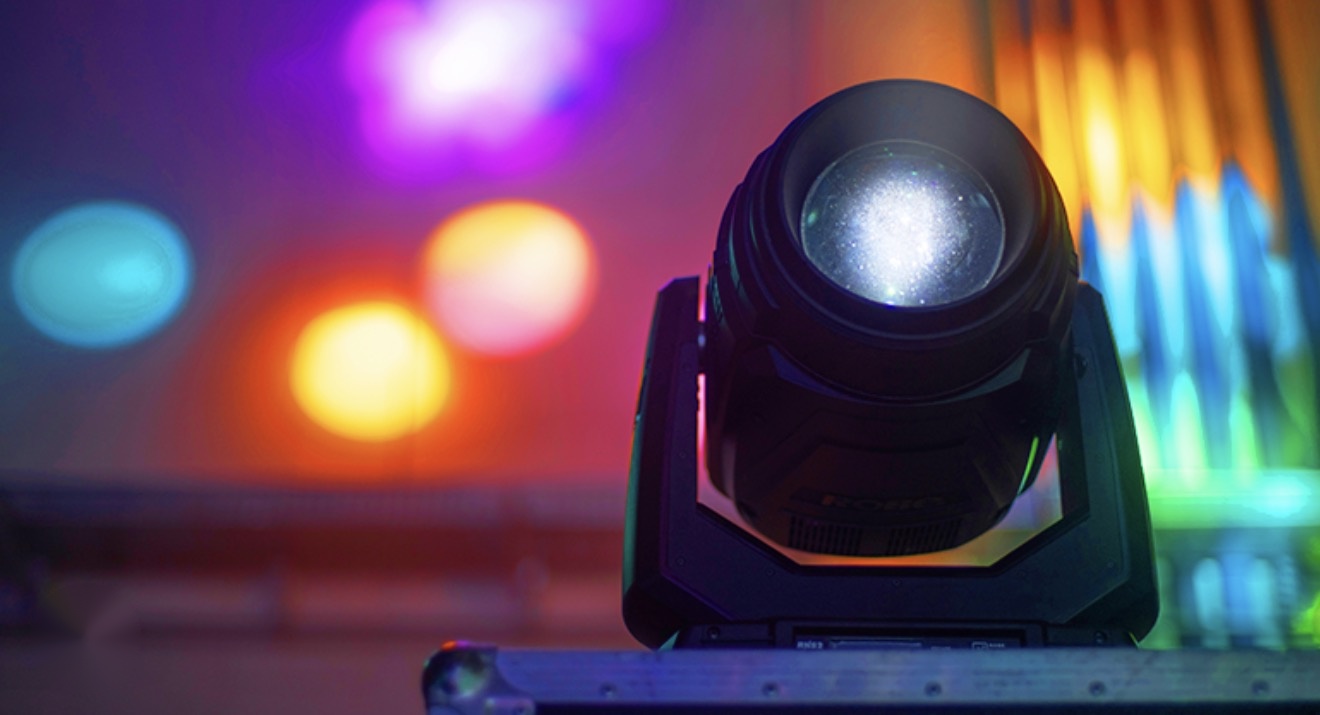
- Moving heads pan, tilt and change color, beam size or pattern under remote control, so a few fixtures can cover many looks.
- Architectural and house lighting covers the audience area, aisles and walls.
Color quality matters, especially on camera. We look at color rendering metrics such as CRI and TLCI and choose fixtures whose white light keeps skin tones natural.
Control: DMX512, RDM, Art-Net and sACN
Most stage fixtures are controlled with DMX512, a serial protocol that carries up to 512 channels per "universe." RDM (Remote Device Management) adds two-way communication over the same cable so fixtures can be addressed and monitored from the controller. Larger systems carry many universes over Ethernet using Art-Net or sACN (E1.31), with network nodes converting back to DMX near the fixtures.
Control can be a lighting console for an operator, software on a computer, or a wall-mounted architectural control station with preset scenes. Many rooms use both: a console for services or shows, and simple scene buttons for daily use. Dimming is handled in the fixtures themselves for LED, or by dimmer racks for any remaining conventional circuits.
Rigging and structural load
Fixtures hang on pipes, truss or purpose-built mounting positions. Every rigging point must be rated for the load it carries, including fixtures, cable, hardware and a safety factor, and every fixture gets a secondary safety cable. We document weights and positions so the structure can be checked.
Power and heat
Lighting circuits are sized for the fixtures' rated draw, distributed so that circuits stay within their limits, and placed close to the fixture positions. LED fixtures reduce load and heat, but moving heads and high-output fixtures still add heat to the room, which the HVAC system has to handle.
Our process
- Consult. Your goals, how the room is used, who will run the lights, budget range and timeline.
- Site walk. We measure the stage and room, check ceiling structure, existing power, sight lines, camera positions and house lighting.
- Design you approve. A lighting plot, fixture schedule by type, DMX/network addressing plan, power plan and control layout. Nothing is ordered until you sign off.
- Install and focus. Rigging, cabling, addressing, focus and programming of base looks and house-light scenes.
- Training. Hands-on training and a quick-reference guide for staff or volunteers.
- Service. Check-ups, re-focus, firmware updates and repairs.
Frequently asked questions
Can new LED fixtures work with our existing console?
Often, yes, if the console speaks DMX512 and has enough channels or universes. We check during the site walk.
Do LED fixtures really save power?
Generally, yes. LED fixtures usually need much less power than incandescent fixtures of similar output, and they produce less heat. Exact figures depend on the fixtures chosen.
Can our house lights be part of the same system?
Yes. House lighting can be tied into the same control so scenes cover both the stage and the room.
Will the lighting look good on our livestream?
That is a design goal. We select fixtures with good color rendering and set levels and color temperature with the camera in mind.
Do you provide lighting for one-time gatherings?
No. We design, install and service permanent systems only.
Ready to light your stage?
Tell us about your room and we will schedule a visit.