
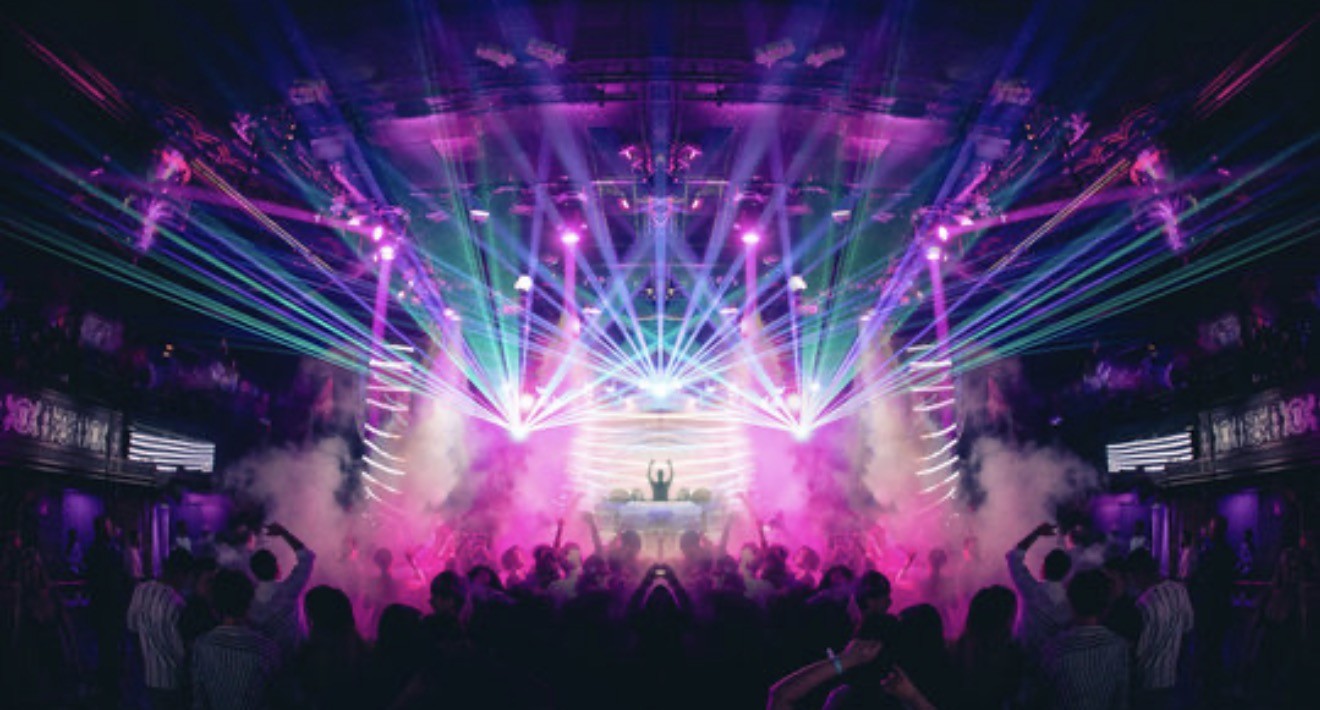
A club's sound is its product. Guests feel the low end on the dance floor, expect to hold a conversation at the bar, and remember whether the room sounded clean at peak level. Divine Audio Solutions designs and installs permanent nightclub systems across Central Florida that deliver impact where you want it and control everywhere else.
Full-range and subwoofer systems
A club system is built from full-range loudspeakers for the mid and high frequencies and dedicated subwoofers for the low end. We choose the format to fit the room: line arrays or high-output point-source loudspeakers for larger floors, compact point-source boxes for smaller rooms. On larger club floors, DAS Audio line arrays such as the LARA-100 (4-way cardioid, 100° horizontal, 150 dB published maximum SPL) or the self-powered EVENT-30A (90° horizontal, 142 dB published maximum SPL) are typical choices. The crossover between full-range and subwoofer sections is set in the DSP and aligned in time and phase so kick drums and bass lines arrive as one coherent sound rather than a smear.
Cardioid subwoofer arrays
Ordinary subwoofers radiate nearly equally in every direction, so low frequencies flood the DJ booth, the bar and the building next door. A cardioid subwoofer array arranges several subwoofers, with some reversed or offset and electronically delayed, so their output adds up toward the dance floor and cancels toward the rear. The result is typically a large reduction in low-frequency level behind the array, a cleaner booth, and less bass leaking into neighboring spaces. End-fire and gradient arrays are related techniques we use when the floor plan suits them.
Zoning: dance floor, lounge, VIP and patio
Different areas of a club have different jobs. We design separate zones, each with its own processing and level control:
- Dance floor: maximum impact and even coverage.
- Bar and lounge: music that is present but allows conversation.
- VIP rooms: a premium sound with local control.
- Patio and outdoor areas: controlled levels with attention to where sound travels.
Coverage is planned to minimize bleed between zones so that each area sounds intentional.
Level control, noise ordinances and limiters
Many Florida cities and counties regulate sound levels at the property line, with limits that often vary by time of day. We design with that in mind: directional loudspeakers and cardioid subwoofers put energy where guests are rather than into the street. In the DSP we can set limiters per zone, so the system cannot exceed agreed levels regardless of who is at the controls. Long exposure to high levels is also a hearing-health concern for staff, so we can discuss sensible level targets.
DSP, limiting and system protection
The system processor handles crossovers, equalization, delay alignment, subwoofer array steering and limiting. Peak and RMS limiters set to the loudspeakers' ratings protect drivers from damage, even when a DJ pushes the mixer into the red. Settings are password-protected and backed up.
Amplifier power, racks and cooling
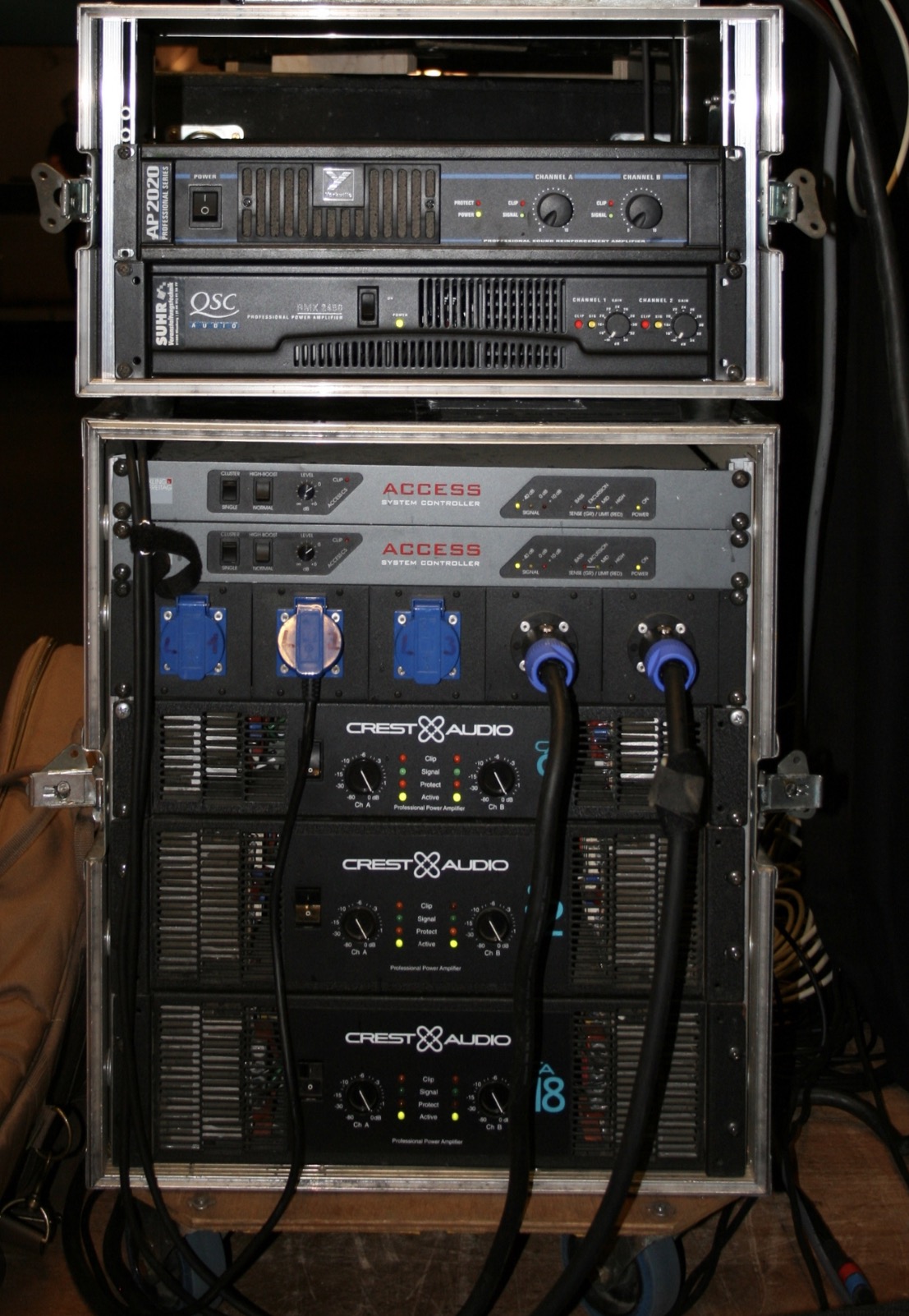
We size amplifiers so the system has headroom at the target level instead of running at its limit. Amplifiers and processing are mounted in racks with proper power distribution, labeled connections and adequate ventilation. Heat is the leading cause of amplifier failure, so we plan airflow and, where needed, discuss dedicated cooling for the equipment room. Electrical circuits for the amplifiers must be sized correctly.
DJ booth integration
The booth needs clean inputs, a dedicated booth monitor with its own level, and a layout that keeps the DJ in control without access to system protection settings. We plan inputs for DJ players, mixers and guest equipment, with backup paths so a single failed cable does not silence the room.
Rigging and structural considerations
Flown loudspeakers and subwoofers are heavy, and clubs vibrate. We use rated rigging hardware with secondary safety attachments, and coordinate with a licensed structural engineer where loads require it. Mounting is designed to avoid rattles and buzzes from fixtures and ceiling panels.
Coverage versus bleed
More loudspeakers aimed carefully usually beat fewer loudspeakers turned up. By keeping each loudspeaker's output on its intended area, we keep the dance floor powerful, the bar conversational and the neighbors happier.
Commissioning
We measure each zone with a measurement microphone and analysis software, align subwoofers and full-range loudspeakers, verify the cardioid rejection behind the subwoofer array, set limiters, and document the final settings.
Our process
- Consult about your concept, music formats and hours.
- Site walk, ideally including a visit during operating hours to hear the room in use.
- Design you approve, with zones, loudspeaker layout and level plan.
- Install and tune, scheduled around your operating hours.
- Training for managers and resident DJs.
- Service and maintenance plans to keep the system healthy.
Frequently asked questions
Why does our bass sound loud in the booth but weak on the floor?
Subwoofer placement and alignment. A properly designed cardioid or end-fire array usually fixes both problems.
Can you keep us within the noise ordinance?
We design for control and can set zone limiters. Compliance also depends on the building, operating practices and local rules, so we recommend verifying limits with your city or county.
Can the VIP rooms have their own volume?
Yes. Each zone can have its own source selection and level control.
Will a DJ be able to damage the speakers?
Limiters set to the loudspeaker ratings protect the system even at full mixer output.
Can you upgrade our current system instead of replacing it?
Often. We audit what you have and tell you what is worth keeping.
Request a site visit
Let us hear your room. Request a site visit · [email protected]