
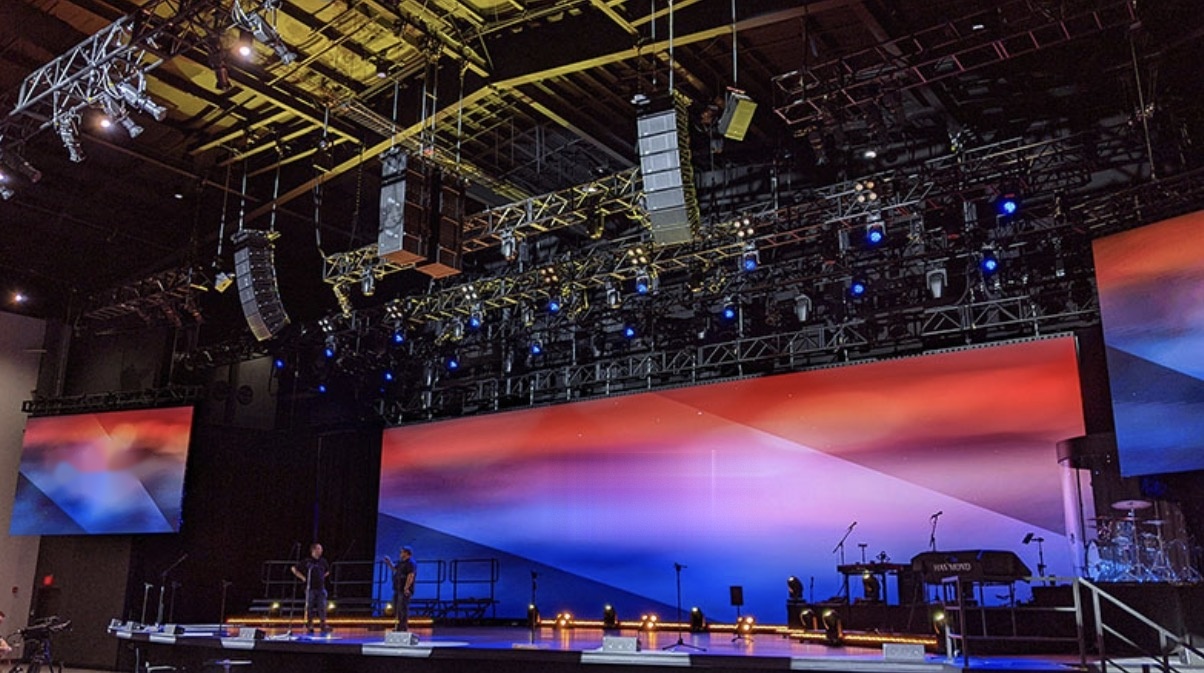
Every word of the message should reach every seat, and the music should support worship rather than overwhelm it. Divine Audio Solutions designs and installs permanent sound systems for sanctuaries, chapels, fellowship halls and youth rooms across Central Florida, then trains your team and services the system for years to come.
Speech intelligibility comes first
In most churches the spoken word carries the service, so we design to a measurable intelligibility target rather than to loudness alone. The Speech Transmission Index (STI, defined in IEC 60268-16) rates intelligibility on a scale from 0 to 1. A value of 0.50 is commonly treated as the minimum for acceptable speech in public address and emergency voice systems, and well-designed worship spaces generally aim higher, around 0.60 or above, where speech is rated "good". An older metric, %ALcons (articulation loss of consonants), expresses the same idea as a percentage of lost consonants; lower is better, with values under roughly 10% generally acceptable and under 5% considered very good.
Intelligibility depends on three things we can control: the ratio of direct sound to reverberant sound at each seat, the speech level above background noise, and how evenly that level is delivered across the room.
Reverberant sanctuaries and RT60
Hard floors, high ceilings, glass and plaster create long reverberation times (RT60, the time it takes sound to decay by 60 dB). A room that flatters a choir or pipe organ can blur speech. Rather than adding more power, we use loudspeakers with controlled directivity to aim sound at the congregation and away from walls and ceilings. Where reverberation is severe, we may recommend acoustic treatment and refer you to an acoustical consultant.
Coverage and level uniformity
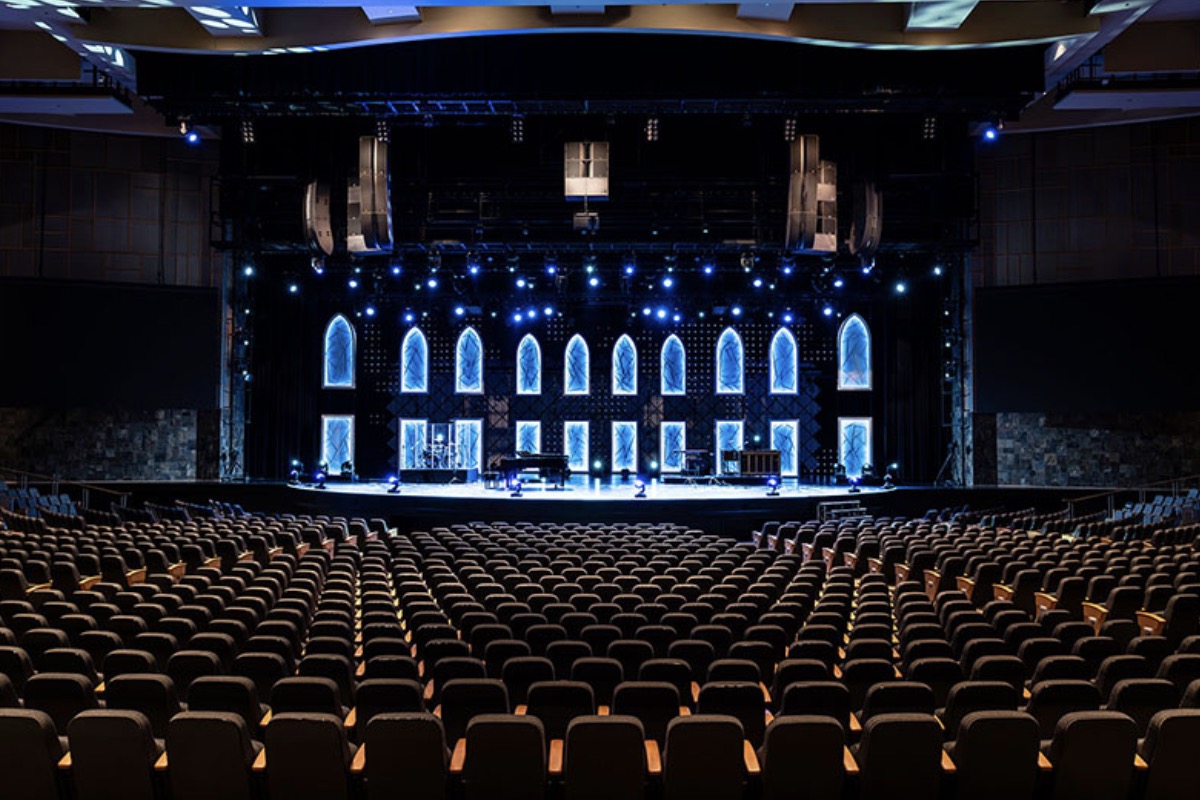
Our goal is a consistent listening experience from the front row to the back of the balcony. We model coverage before installation and typically design for a level variation of only a few decibels across the seating area in the speech range. The right architecture depends on the room:
- Line arrays suit wide or deep rooms and high ceilings, where vertical control keeps sound on the seats and off reflective surfaces. For larger sanctuaries we specify DAS Audio ARA-series line arrays such as the compact SARA-100 or the cardioid LARA-100, both with 100° published horizontal coverage.
- Point-source loudspeakers suit smaller or more traditional rooms and can be placed discreetly to match the architecture.
- Distributed and delay zones cover balconies, under-balcony seating, overflow areas, foyers and cry rooms. Each zone is time-aligned in the DSP so sound appears to come from the platform.
Microphones, wireless and RF coordination
We specify microphones for each role: headset or lavalier for the pastor, handheld for worship leaders, and choir or instrument mics where needed. Wireless systems are planned around the frequencies legally available in your area. Since the FCC reallocated the 600 MHz band, older wireless systems in that range may no longer be legal to operate. We coordinate frequencies so channels do not interfere with each other and locate antennas for reliable coverage.
Mixing console, DSP and monitoring
A digital mixing console with saved scenes lets a volunteer recall a known-good setup each week. Behind it, a dedicated DSP handles loudspeaker equalization, crossover, delay alignment, feedback management and limiting to protect the system. For the platform, we design floor-wedge or personal in-ear monitor systems; in-ear monitoring lowers stage volume, which improves clarity in the room.
Assistive listening (ADA)
Under the 2010 ADA Standards for Accessible Design (section 219), assembly areas with audio amplification generally must provide an assistive listening system, with the number of receivers based on seating capacity and a portion of them hearing-aid compatible. Religious organizations are largely exempt from Title III of the ADA, but many churches choose to provide assistive listening as part of welcoming every member, and local building codes may still apply. We design and install the main options:
- Hearing loops (induction) send sound directly to telecoil-equipped hearing aids with no receiver needed.
- RF systems use portable receivers and earphones or neck loops.
- Infrared (IR) systems keep the signal inside the room, which is useful for privacy or adjacent spaces.
Streaming and recording feeds
The mix that sounds right in the room is rarely right for the stream. We provide a dedicated, separately processed feed for streaming and recording, with options for ambient microphones, so online viewers hear a balanced service.
Volunteer-friendly control and training
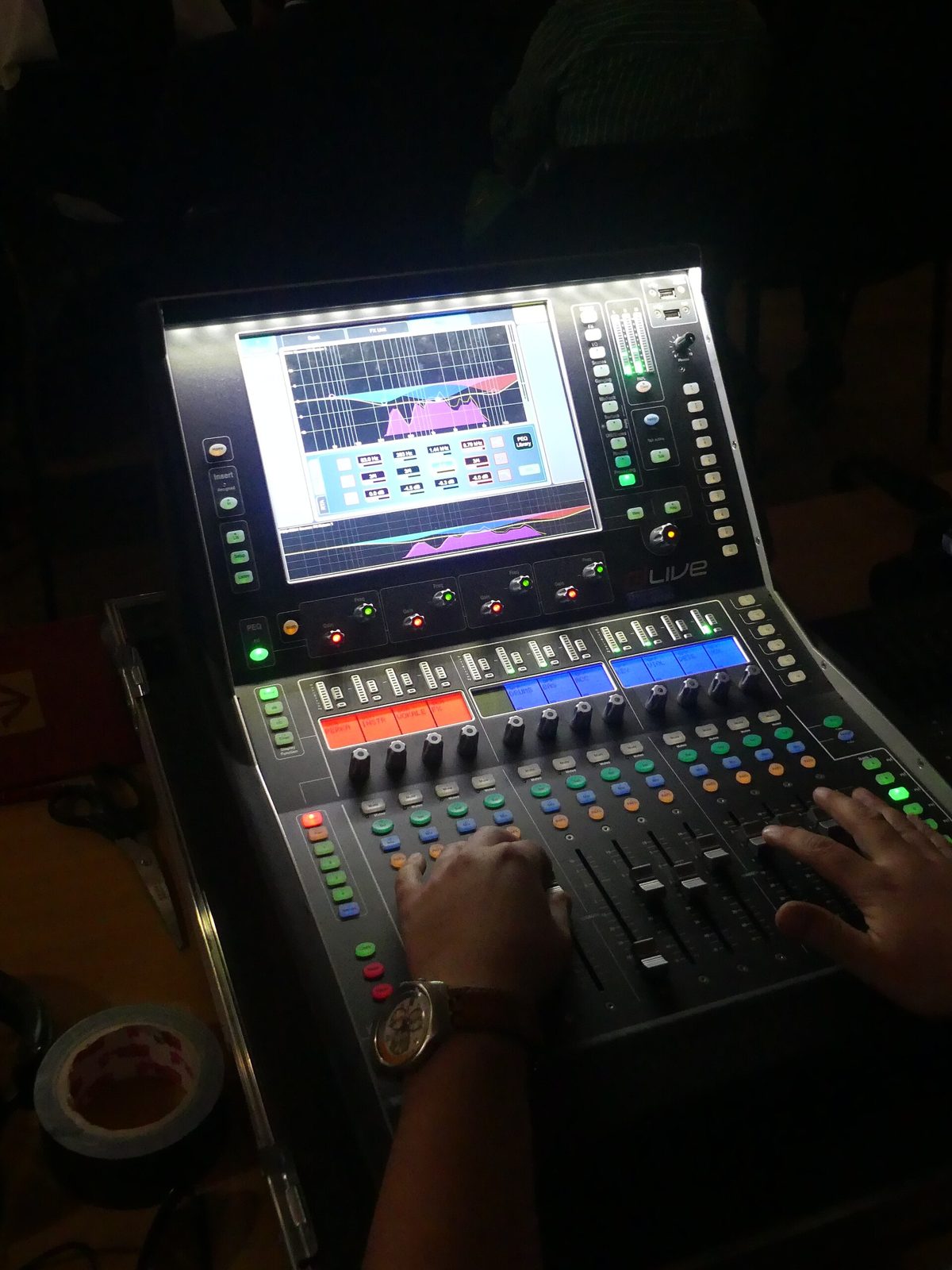
We simplify operation with labeled scenes, wall-panel presets for simple meetings, and locked settings that protect the tuned system. Training is hands-on, covers your actual setup, and includes a quick-reference guide.
Rigging, structure, cabling and fire alarm interplay
Flown loudspeakers require rated hardware and attachment points that the structure can support. Where loads are significant, we coordinate with a licensed structural engineer. Cabling follows code-compliant routes with proper separation and labeling. If your building has a fire alarm or emergency voice system, the sound system should be designed to mute or yield to it; that interface is coordinated with your fire alarm contractor and must meet NFPA 72 and the authority having jurisdiction.
Commissioning and tuning
After installation we measure the room with a calibrated measurement microphone and analysis software, adjust equalization and delays, verify coverage and level, and document the results. Settings are backed up so the system can be restored to its tuned state.
Our process
- Consult about your services, worship style and team.
- Site walk with measurements and a look at structure and power.
- Design you approve, with a written scope and coverage plan.
- Install and tune around your service schedule.
- Training for your volunteers and staff.
- Service and optional maintenance plans.
Frequently asked questions
Why can people hear but not understand the sermon?
Usually the issue is too much reverberant sound relative to direct sound, or uneven coverage, not a lack of volume. Directional loudspeakers and proper tuning usually fix it.
Do we need a line array?
Not always. Line arrays help in large or tall rooms; many sanctuaries are better served by point-source or distributed designs.
Are our wireless microphones still legal?
Systems operating in the 600 MHz band may not be. We can check your models and frequencies during the site walk.
Can volunteers run the system?
Yes. We design with saved scenes and simple controls, and we train your team on site.
Do you install hearing loops?
Yes, along with RF and infrared assistive listening systems.
Request a site visit
Let us see your sanctuary and hear how you worship. Request a site visit · [email protected]